


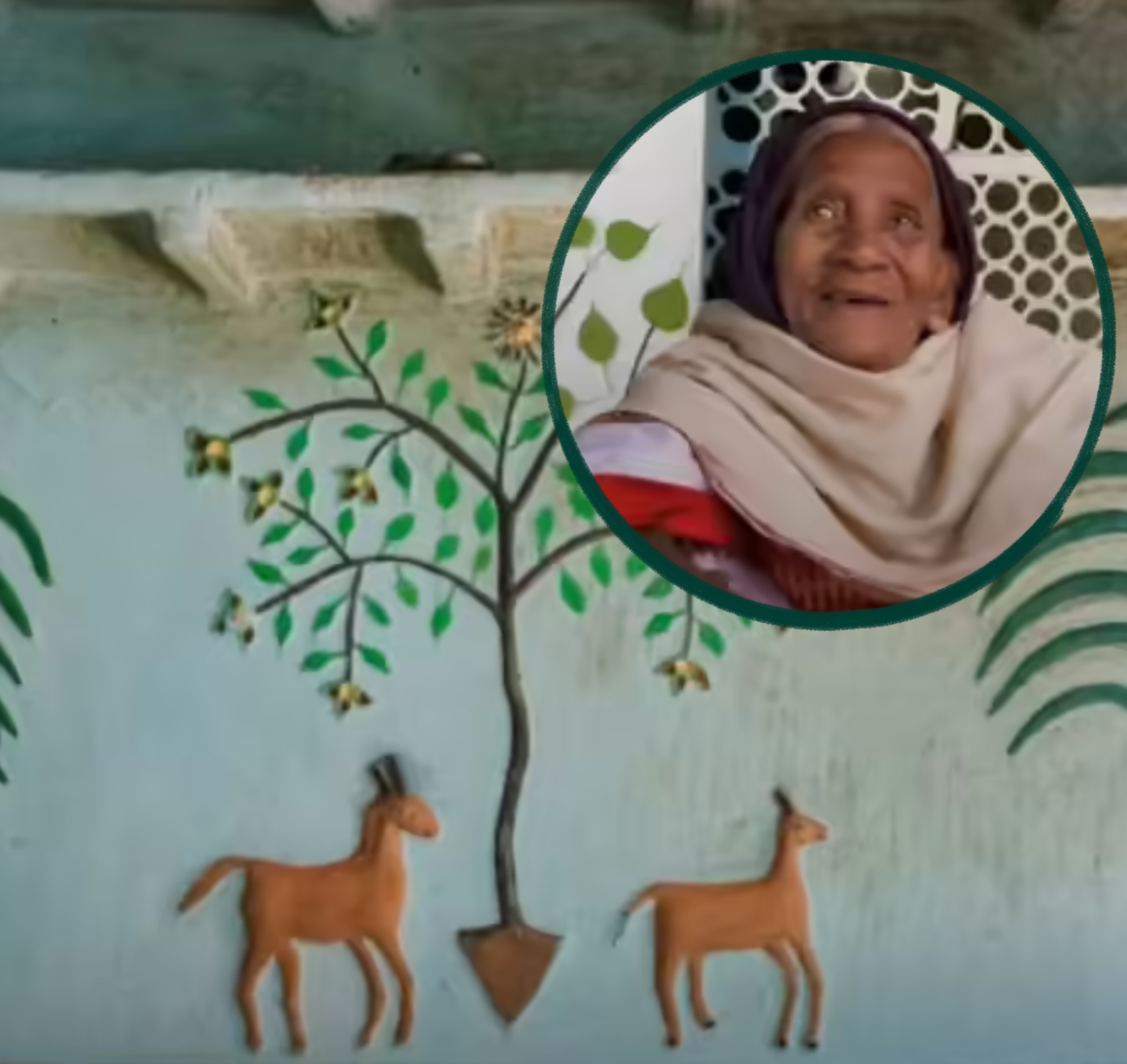
In the remote village of Puhputra, Sarguja district, Chhattisgarh, Sonabai Rajwar turned 15 years of brutal isolation into a celebrated artistic legacy. Married young in the early 1940s, she was confined by her husband in a small windowless house, cut off from the world. Even after giving birth to her son Daroga Ram, she lived in silence and loneliness.
Instead of breaking down, Sonabai found strength in creativity. She dug clay from her well and began crafting toys for her child — deer, human figures, and more. Using kitchen ingredients like herbs, spices, and oil for colours, and twigs as brushes, she transformed her prison into a canvas. Her walls soon came alive with whimsical folk art sculptures made from clay, straw, and bamboo.
In 1983, artists from Bharat Bhavan discovered her extraordinary work. Recognition followed quickly: she received the Tulsi Samman and, at 53, the National Award for Master Craftsperson from the President of India. Her art later travelled to museums in the USA, Europe, Japan, and Australia. Sonabai passed away in 2007 at 77, but her home stands today as a museum.
She pioneered a unique clay art tradition that defines the Rajwar community. Her story is a powerful reminder that imagination can never be imprisoned.